


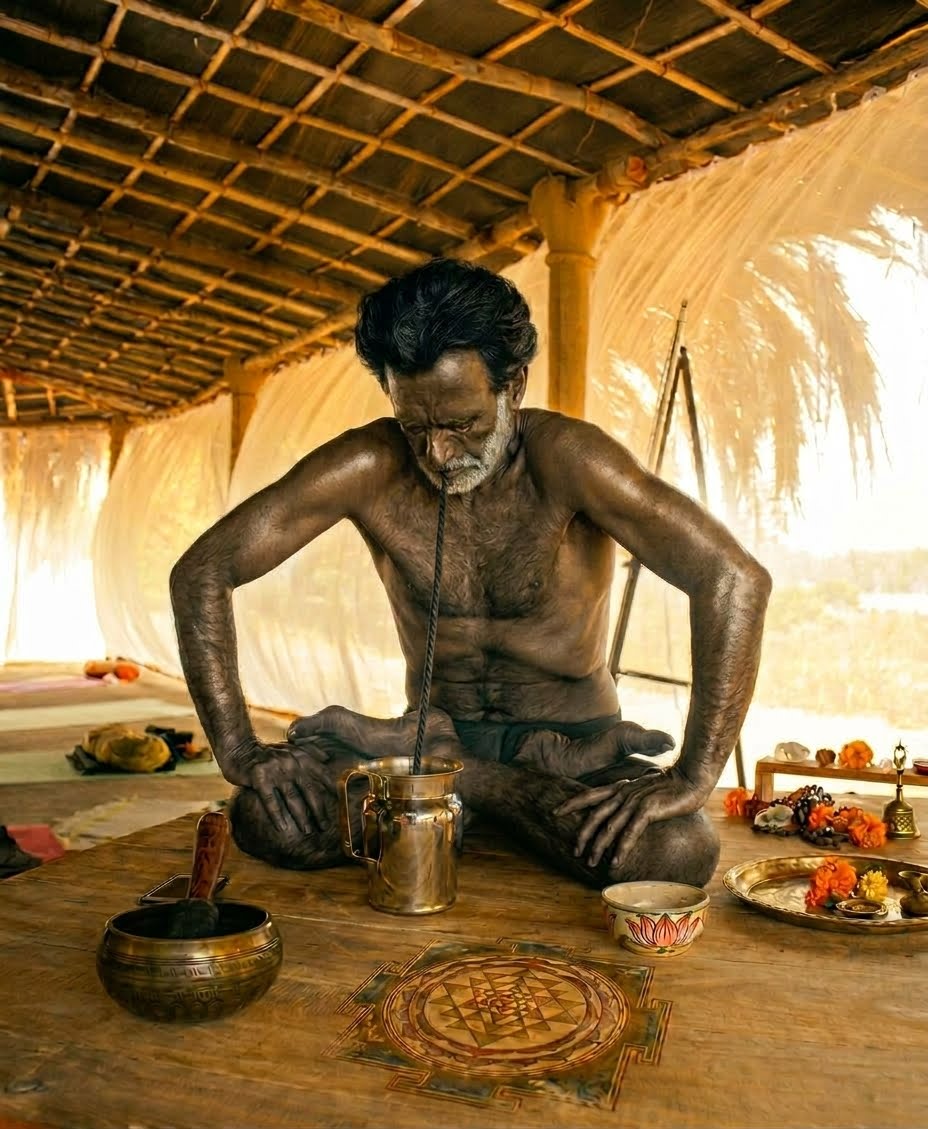
Even if someone disagrees with the philosophical aspect of Yoga, everyone accepts its practical dimension. The reason is clear: as long as the body and mind are not healthy, no kind of spiritual practice can be successfully accomplished.
Tantra has also accepted Yogic actions exactly in this manner. Both Sāṅkhya and Yoga are expounded with minor modifications by Tantra Shastra—adapting them to its own terminology and structural requirements. For example, it assigns the names Śiva and Śakti to the Prakṛti and Puruṣa of the Sāṅkhya philosophy.
Ṣaṭkarma Vidhāna
(The System of the Six Cleansing Actions)
The Ṣaṭkarmas (six cleansing actions) are the foundational steps of Yoga practice. It is solely through them that yogis fulfill their desires for spiritual perfections (siddhis). Diverse methodologies of Yoga are described in the scriptures, among which the Ṣaṭkarma system is prominent. Generally, all other systems revolve around this core.
According to the Haṭhayoga Pradīpikā:
- Dhauti (internal washing/cleansing)
- Neti (nasal cleansing)
- Nauli (abdominal churning)
- Kapālabhāti (frontal brain cleansing/breathing)
- Trāṭaka (gazing meditation)
These are the Ṣaṭkarmas (alongside Vasti or colon cleansing). However, some scholars count Neti, Dhauti, Vasti, Gajakarmī, Nauli, and Trāṭaka as the six actions. Others additionally include Kapālabhāti, Dhauṅkanī, Bāghī, and Śaṅkhapāla—incorporating these four as well. Since the Ṣaṭkarmas are merely branches of a practice, their variations hold no contradictory meaning. Their rules have been described differently by almost all yogis in their own distinct ways. No matter how the practice of bodily purification is performed, it shows its effective results. Through its influence, the practitioner’s desires are fulfilled, and that action is considered a proven success (kriyā siddha).
For this reason, whichever methodology ancient sages found accessible, they adopted it to construct a systematic technique. Ancient Indian rishis placed all these systems under the umbrella of Yoga practice (yoga-sādhanā).
For a practitioner of the Ṣaṭkarmas, it is absolutely essential to follow the rules regarding location, food, conduct, and thought as demonstrated in Haṭha Yoga. Therefore, it can be stated that the location must be pleasant and secure, and the food must be sāttvika—consisting of nourishing and light substances such as milk, ghee, ground almonds, candy sugar, etc., and must be consumed in moderation (parimita). By proper conduct and thought, one should understand practices like living in solitude (ekānta-sevana), speaking little, dispassion (vairāgya), and courage.
Naulī Yoga (Naulī Karma) – Churning of the Ocean
Bending the shoulders slightly forward and with great speed, churning the abdomen from right to left and left to right like a whirlpool of water is what the perfected masters (siddhas) call Naulī Karma. In reality, the true secret of moving the stomach from right to left cannot be learned simply by reading books; it can only be mastered from a competent Guru. Therefore, its primary structure should be understood in this way: after finishing one’s morning ablutions, bath, and early morning prayers (prātaḥ-sandhyā), and when the stomach is clean and light, one should sit in Padmāsana (or Siddhāsana, or assume the squatting posture Utkaṭāsana). Perform a complete exhalation (recaka), hold the breath outside (bāhya-kumbhaka), and without moving the body, visualize moving the stomach from right to left and left to right purely through willpower (manobala) while making physical efforts accordingly.
By practicing this daily in the morning and evening until sweat breaks out, abdominal obesity and sluggishness vanish. Thereafter, one should contemplate that both flanks of the waist have been compressed inward, and in the middle, two energy tubes have joined together from the Mūlādhāra up to the heart to form a rounded, upright column (naulī-cālana central ridge). When this central abdominal column becomes firmly consolidated, Naulī becomes easy to execute. By increasing the practice through willpower and deliberate effort, this column begins to churn from right to left. While moving it, a deep structural friction or pulsation of the energy pathways (nāḍīs) is felt near the chest, at the throat, and even on the forehead. Once Naulī is mastered, it moves continuously with ease. Initially, during the execution, the stomach remains relaxed. A person whose stomach is naturally light and who practices with focused dedication will master Naulī within a month. If one practices Paścimottānāsana and Mayūrāsana slightly before starting this practice, Naulī is perfected much faster.
Until the intestines are properly isolated and separated from the muscular structural walls of the back, perform the action of lifting the intestines with extreme caution; otherwise, the intestines will become weak. Sometimes, due to sudden inner shock or incorrect practice, disorders like abdominal diseases (udararoga), inflammation (śotha), acute rheumatism (āmavāta), lumbago (kaṭivāta), sciatica (gṛdhrasī), chronic constipation, spermatorrhea, or other illnesses can arise. Therefore, this practice must be performed with a calm and peaceful disposition. Naulī is highly harmful if practiced during conditions like intestinal inflammation, excess bile secretion (pittaprakopa), diarrhea (atisāra / dysentery), and irritable bowel syndrome (saṅgrahaṇī).
This Naulī perfectly kindles a weak digestive fire (mandāgni), properly digests food grains, and always generates an inner sense of bliss, while drying up all diseases born of the Vāta (air) humor. Naulī is supreme among all the practical exercises of Haṭha Yoga. Due to the intestines coming under the complete control of Naulī, digestion and the elimination of bodily waste happen naturally and spontaneously. While performing Naulī, the normal breathing process temporarily stops. However, upon completing Naulī, a beautiful, indescribable taste is experienced near the throat. It is superior to all other practices of Haṭha Yoga because…
Once Naulī is mastered, executing all three energetic locks (bandhas: Mūla, Uḍḍīyāna, and Jālandhara) becomes effortless. Therefore, this serves as the stepping stone to Prāṇāyāma. Even in the practices of Dhauti and Vasti, the execution of Naulī is indispensable. Furthermore, Naulī acts as a supporting mechanism in Śaṅkhaprakṣālana—a cleansing practice in which water is swallowed through the mouth, guided through the intestines by swirling abdominal movements, and expelled through the rectum in the exact same manner water flows seamlessly through one side of a conch shell and emerges out the other opening.
Vasti Karma – Yogic Method of Self Preformed Enema
The Vasti area is situated near the Mūlādhāra cakra. Its energetic color is red, and its presiding deity is Lord Ganesha. The specialized cleansing operation performed to purify the Vasti region is known as Vastikarma. In a text named Yogasāra, it is mentioned that to bring the downward-moving air (apānavāyu) under complete control, one should ingest medicinal pills formulated from aged jaggery, Triphalā, and the juice of Leadwort (Citraka) bark. Only after this preparation should the practice of Vastikarma be systematically undertaken.
This cleansing action is of two distinct types: Pavanavasti (air enema) and Jalavasti (water enema). Expelling waste while performing Naulī in Mayūrāsana (peacock posture) is categorized under Vastikarma. Once Pavanavasti is completely perfected, Jalavasti becomes effortlessly accessible, because the inner force that draws the water upward is none other than the regulated internal wind (pavana). When Naulī can be executed while submerged in water up to the navel, water is drawn upward into the bowels through the suction generated by Naulī.
To perform Jalavasti, insert a smooth bamboo tube that is six fingers long and has an internal diameter wide enough to accommodate the little finger into the center of the rectum. Lubricate the tube carefully with ghee or oil, and introduce it four fingers deep into the rectum, leaving two fingers of the tube protruding outside. Following this, submerge yourself in a tub filled with water up to the level of the navel, and assume the squatting posture known as Utkaṭāsana—meaning, stand firmly on the balls of the feet with the heels touching, rest your buttocks upon the heels, and maintain balance on the front portion of the feet. Sitting in this posture, execute Ādhārākuñcana (the contraction of the anal sphincter/Mūlabandha), which causes water to spontaneously rise upward into the large intestine. Afterward, churn the entered water inside using the Naulī technique and expel it completely. Along with this expelled water, accumulated fecal matter, mucus (āṃva), parasitic worms, and toxic internal metabolic waste trapped inside the central core of the intestines are flushed out. This thorough internal washing and cleansing of the abdomen is called Vastikarma.
Both Dhauti and Vasti must invariably be performed on an empty stomach, prior to consuming any meal. Shortly after completing these cleansing practices, one should promptly consume a light meal such as rice-and-lentil porridge (khicaḍī) cooked with a generous amount of clarified butter (ghee), and no delay should be made in eating. When performing Vastikarma, a small fraction of the drawn water occasionally remains trapped inside the large intestine; this leftover water will gradually be evacuated through the urinary tract. If a meal is not consumed timely after the practice, this residual contaminated water will be reabsorbed by the subtle energetic pathways (nāḍīs) connected to the lower intestines and will mix directly into the bloodstream.
Some practitioners first practice drawing the vital life-force (prāṇavāyu) upward from the Mūlādhāra before attempting the suction mechanism while submerged in water. By performing Vastikarma in this manner, water enters the abdomen. Because of this, the entire volume of water cannot be expelled. For this reason, various complications such as tissue depletion (dhātukṣaya) occur. Therefore, one should not perform Vastikarma incorrectly in this manner.
Here, it is also essential to understand that to protect oneself from tiny aquatic organisms, one should cover the opening of the anus with a fine piece of cloth before executing the contraction (ākuñcana). To expel the water completely, one should perform the standing version of Paścimottānāsana (standing forward bend). Many practitioners practice drawing water from ponds or rivers. Because of this, microscopic, poisonous aquatic organisms occasionally enter the intestines along with the water and give rise to various diseases. Furthermore, because the water of the holy river Gaṅgā and many large rivers originating from the Himalayas is extremely cold, it can cause harm rather than the desired benefit to individuals with lower physical strength and vitality. When the water is excessively cold, the process of its absorption by the subtle energetic pathways (nāḍīs) begins immediately. Moreover, cold water causes the accumulation of mucus (āṃva) or phlegm (kapha). Therefore, it is particularly beneficial to sit in a tub or a large vessel and draw pure water that is cool yet at a tolerable temperature.
In the therapeutic systems of Haṭha Yoga and Ayurveda, the enema process (vastikriyā) involves introducing decoctions, oils, and medicated ghees prepared with various medicinal herbs. A specialized apparatus has also been designed for this procedure, which is commonly referred to as an “enema.” Through this mechanical device, lukewarm water mixed with a small amount of soap, castor oil, or glycerin is introduced through the rectum into the colon to cleanse the stool. In the Western world, this practice has become so widespread that many individuals consider it necessary to administer an enema once a week. However, this mechanical enema does not provide the same profound benefits as the traditional yogic Vastikarma. This is because the entire volume of introduced water cannot be completely expelled. Sometimes, it is observed that a large portion of the water remains stagnant inside, causing severe internal harm.
The difference between drawing water through one’s own internal vacuum and willpower versus administering water through an external mechanical apparatus is as vast as the difference between walking ten miles on foot versus traveling the same distance inside a motorized vehicle. Furthermore, introducing warm water through an external device transmits excess heat to the reproductive organs (vīryasthāna) and the urinary tract, inflicting subtle, recurring harm. This specific flaw does not exist in the traditional Vasti of Haṭha Yoga.
Through the systematic purification and washing of the Mūlādhāra region during Vastikarma, it is natural for diseases affecting the reproductive organs and the rectum to be completely destroyed. Under the therapeutic influence of Vastikarma, chronic abdominal tumors (gulma), spleen disorders (plīhā), dropsy/ascites (jalodara), and all ailments born of the imbalances or combinations of Vāta, Pitta, and Kapha are entirely eradicated. This practice thoroughly refines the seven bodily tissues (sapta-dhātus), brings pristine clarity to the ten senses (indriyas), and infuses the inner psyche (antaḥkaraṇa) with deep joy. A natural, pure (sāttvika) radiance spreads across the practitioner’s face. The internal digestive fire (jaṭharāgni) is intensely kindled. By eradicating both the excess accumulation and the severe deficiency of the Vāta, Pitta, and Kapha humors, it establishes a state of absolute, balanced health (sāmyarūpa ārogya).
In this context, there is one crucial point worth keeping in mind for anyone performing the Vasti practice:
One should first perform and become advanced in Neti and Dhauti practices, before attempting Vastikarma.
There is no such rigid rule for other cleansing actions. Furthermore, Vastikriyā must strictly not be performed during medical conditions such as tuberculosis (rājayakṣmā / kṣaya), irritable bowel syndrome (saṅgrahaṇī), dysentery (pravāhikā), bleeding disorders of the lower tract (adhorakta pitta), anal fistula (bhagandara), inflammation of the rectum and anus (malāśaya aur gudā meṃ śotha), continuous chronic fever (satat jvara), typhoid/enteric fever (āntrasannipāta / mild fever), enteritis (āntraśotha), intestinal hernia/prolapse (āntrantrāṇa), and acute respiratory distress or severe asthma triggered by excess phlegm (kaphavṛddhijanita tīkṣṇa śvāsa prakopa).
Moreover, this Vastikriyā is not meant to be practiced daily once the systematic practice of Prāṇāyāma has begun. Practicing it daily will cause the natural intestinal power to become dependent on external aid and turn weak. Consequently, in the future, spontaneous bowel movements and waste elimination will not occur without the assistance of a Vasti. Just as individuals addicted to tobacco and tea cannot pass stool without consuming them, similarly, those who perform Vastikarma or the Ṣaṭkarmas daily lose the body’s natural capacity to cleanse itself through its own innate internal strength.
Dhautikarma – Cleansing with the Cloth
For the Dhauti practice, take a fine strip of cloth that is four fingers wide and fifteen cubits (hātha) long. Wet it in warm water and wring it out slightly. Following the precise method instructed by the Guru, practice swallowing it gradually, bit by bit every day, sequentially increasing the length by one cubit each day. Within eight to ten days, one can master swallowing the entire length of the Dhauti cloth. Approximately one cubit of the cloth should be left hanging outside the mouth. Firmly grip the end remaining in the mouth between the molars and execute the Naulī technique (nyolīkriyā). After completing this, slowly and carefully pull the cloth back out.
Here, it is essential to know that prior to extracting the cloth, one should drink a generous amount of water. This makes pulling out the cloth highly comfortable and causes the accumulated phlegm (kapha) and bile (pitta) to wrap around the fabric easily. Additionally, this water protects the throat from irritation during extraction. The Dhauti cloth must be washed thoroughly with soap every day to keep it perfectly clean; otherwise, residual atoms of contaminated phlegm-substance or foreign matter trapped in the fabric will enter the stomach again the following day and cause harm.
Many practitioners initially drink water and swallow a fresh bamboo split/scraper (karcī / kaīnī) or a slender aerial root of a banyan tree (baṭ kā baroha) measuring one and a quarter cubits in length, gradually building their practice over time. Some master Dhauti using a textured cotton rope. Whenever they swallow it, the water begins to flow out, which also makes it easier for the scraper or rope to slide inside. In Dhautikarma, some individuals use a red cloth. Observers viewing this practice from a distance often spread rumors, claiming that they saw with their own eyes a particular Mahatma pull out his own intestines and liver to wash them. Although this falsely increases the public reverence toward yogis, it ultimately results in the propagation of untruths.
Westerners have invented the “Stomach Tube” for a similar purpose. It features a rubber tube that is one and a quarter cubits long, with one end left open and slightly above the end, there is a side-hole. After drinking water, the open end is kept facing upward while the other end is swallowed, allowing the water to drain out through the rubber tube. No matter what kind of Dhauti is practiced, it forces out phlegm (kapha), bile (pitta), and various discolored, toxic internal impurities. Occasionally, a wandering grain of food trapped in the upper digestive tract also drops out, and the teeth may feel slightly sour. However, the mind becomes peaceful and joyful. The spring (basanta) or summer (grīṣmakāla) season is considered the ideal time to undertake this practice.
Dhautikriyā is not beneficial and should be avoided during medical conditions such as inflammation of the uvula, larynx, or trachea (ghaṭikā, kaṇṭhanalika yā śvāsanālikā meṃ śotha), dry cough (śuṣka kāsa), hiccups (hikkā), vomiting (vamana), gastritis/stomach inflammation (āmāśaya meṃ śotha), irritable bowel syndrome (grahaṇī), acute diarrhea (tīkṣṇa atisāra), and upper-tract bleeding disorders (ūrdhva raktapitta / vomiting blood). Furthermore, if this practice is performed daily without absolute necessity, the essential, beneficial bile and mucus will continuously be altered and thrown out due to swallowing the cloth. This will weaken the digestive fire (pācanakriyā manda), leading to systemic bodily weakness. If Dhauti is performed when the duodenal lining (grahaṇīkalā) is inflamed due to severe bile aggravation (pitta prakopa), there is a risk that a portion of the cloth might slip and become tightly wedged in the narrow junction connecting the stomach and the small intestine. Similarly, if the cloth tears inside, there is a danger of it getting trapped. If such a mishap occurs, one should drink a small amount of warm water and stimulate a gag reflex using a Brahmadātun(herbal toothbrush stick), which will cause the cloth to release and exit through the mouth. For these reasons, practicing Dhauti in diseases born of aggravated bile is considered highly improper.
Netikarma – Nasal Cleansing
Neti is of two distinct types: Jalaneti (water nasal cleansing) and Sūtraneti (thread nasal cleansing). Jalanetishould always be practiced first. In the morning, after cleaning the teeth (dantadhāvana), check which nostril has active airflow. Take water in a cupped palm (cullū), close the opposite nostril, and draw the water upward through the active nostril. The water will flow through and enter the mouth. Due to the baseline effect of this action, a tingling, vibrating, or buzzing sensation (gudgudāhaṭ, sansanāhaṭ yā giṅgiṇāhaṭ) will be felt throughout the entire back region of the head where the brain resides. As the practice ripens over time, this sensation will cease to occur. Some practitioners draw water through one nostril and allow it to exit through the other nostril; this specific procedure is what is called Jalaneti. With steady practice, a volume ranging from half a ser to one ser (approximately 500ml to 1 liter) of water can safely be passed from one nasal passage to the other. This practice is exceptionally beneficial for school and college students as well.
Jalaneti must strictly not be performed during conditions like acute eye diseases (tīkṣṇa netraroga), acute hyperacidity (tīkṣṇa amlapitta), and acute running fever (nava jvara). Many individuals routinely drink water upward through their nostrils every morning. This specific habit is not beneficial. The reason is that any accumulation of toxic impurities or morbid humors stored within the nasal passages will be forced down directly into the stomach. Therefore, early morning water consumption (uṣāpāna) must invariably be performed through the mouth alone.
Following the completion of Jalaneti, one should transition to the thread practice (sūtra). Take a fine cotton thread consisting of ten to fifteen interwoven strands, one-cubit-long (untwisted it should measure six-to-seven-inches at the end), which has been tightly twisted to make it progressively thin.
Smooth it with melted beeswax to make it slick, and moisten it with water. Bend this smooth, thin tip slightly and insert it into whichever nostril has active airflow. Close the opposite nostril with a finger, and inhale deeply and forcefully (pūraka) multiple times. This action draws the thread down the nasal passage until it drops into the back of the mouth. Reach into the mouth with the index finger (tarjanī) and thumb (aṅguṣṭha), grasp the thread, and pull it out through the lips. Wash the Neti thread, insert it into the other nostril, and pull it out through the mouth in the exact same manner. After practicing this for a few days, grasp the one-cubit thread simultaneously outside the mouth and outside the nostril, and gently saw it back and forth. This advanced variation is called ‘Gharṣaṇaneti’ (friction nasal cleansing). Repeat the process using the second nostril when airflow switches to that side. Through this friction, deeply trapped, hardened mucus (kapha) separates from the nasal lining and exits along with the thread.
The thread can also be passed directly from one nostril out through the other nostril, though some masters consider this method flawed and avoid it. Its sequence is as follows: draw the thread into one nostril through a deep inhalation (pūraka), but instead of exhaling through the mouth (recaka), force the air out through the opposite nostril. Managed in this way, the thread crosses over internally from one nasal passage to the other. There is no need to fear any danger when executing this action. Once the technique is mastered, it should be practiced every third day. Jalaneti (water cleansing), on the other hand, can safely be practiced daily. Some individuals experience sudden sneezing fits when inserting the thread; if this happens, completely suspend your breathing (śvāsocchvāsa) for one to two seconds while inserting the cord to stop the reflex.
Neti thoroughly purifies the frontal skull cavities (kapāla) and bestows divine, luminous vision (divyadṛṣṭi). It rapidly destroys all physical ailments located above the structural junctions of the shoulders, arms, and head. If a practitioner experiences localized pain, bleeding, or a burning sensation in the upper nasal tract due to Neti or an excess of Kapha, they should smell cow’s ghee (goghṛta) twice a day. Place a small amount of liquid ghee on the palm, close one nostril, and sniff it up deeply through the other nostril so it rises into the sinus cavities. Do not practice Neti during diseases triggered by an aggravation of the bile humor (pittaprakopa), such as anemia (pāṇḍu), jaundice (kāmalā), hyperacidity (amlapitta), upper-tract bleeding disorders (ūrdhva raktapitta), bilious fever (pittajvara), burning sensations in the nose or eyes (nāsikā yā netra meṃ dāha), conjunctivitis (netrābhiṣyanda / redness of the eyes), and brain inflammation (mastiṣkadāha). If there is an absolute necessity, perform it with extreme caution and never practice the friction method (gharṣaṇa). However, practicing Jalaneti during a standard bile aggravation is highly beneficial.
Trataka Karma – Steady Gazing Practice
With a completely focused mind, a person should gaze with a steady, unblinking eyes (niścal dṛṣṭi) at a subtle, minute target—meaning a small object—until tears begin to flow copiously from the eyes. Acharyas like Matsyendranātha call this cleansing action Trāṭaka Karma. To practice Trāṭaka, make a small black dot the size of a mustard seed upon a plain white wall, and fix your gaze directly upon it.
As the gaze gradually settles and stays fixed, the mind becomes deeply concentrated (samāhita / one-pointed) and the eyes become endowed with immense power. The hypnotic magnetic power that is achieved through mesmerizing is the exact same power obtained through Trāṭaka. This practice destroys all eye diseases. It prevents lethargy (tandrā) and laziness (ālasya) from entering the body. Trāṭaka Karma is worthy of being kept secret in this world, just as a chest filled with pure gold is kept hidden. Within the Upanishads, Trāṭaka is divided into three distinct types: Antar (internal), Bāhya (external), and Madhya (intermediate). However, the classical texts of Haṭha Yoga do not make these distinct structural divisions. The description of these three types is given sequentially below.
Keeping the eyes closed and with deep concentration, visualizing the functional lens of the eye fixed within the heart or the space between the eyebrows (bhrūmadhya) is what is called ‘Antar Trāṭaka’ (Internal Gazing). This internal gazing shares a high degree of structural similarity with deep meditation (dhyāna). When beginning to practice Trāṭaka on the space between the eyebrows, a localized headache may occur in the forehead for the first few days, and a flickering restlessness may be felt in the eyelashes. However, after a few days, absolute stillness is achieved within the eye-gaze. Practitioners who attempt to stabilize their gaze within the heart region do not face such structural discomforts. Fixing the gaze on the moon, a bright star, a grass-covered mountain peak, or any other far-distant target is what constitutes the general practice of Trāṭaka. Gazing directly at the naked sun is strictly forbidden. The reason is that because a similar type of energy exists within both the sun and the human visual light-force (netrajyoti), the eye power will continuously be drawn away by the sun, causing the eyes to weaken drastically within two to three months. If one wishes to practice Trāṭaka on the sun, they must stand in a body of water and gaze solely upon the sun’s reflection. This method of fixing the gaze on a distant, external object is called ‘Bāhya Trāṭaka’ (External Gazing).
Fixing the gaze on a sacred symbol like Oṃ (ॐ) written with black ink on paper, a single dot (bindu), an image of a deity or a picture of God, a steady candle flame, a motionless wick burning sesame oil, a metallic statue illuminated by lamp-light, the tip of one’s own nose (nāsikāgra), or any other nearby target is called ‘Madhya Trāṭaka’ (Intermediate Gazing). Initially, one should not practice gazing at the space between the eyebrows with wide-open eyes for an extended duration; otherwise, the delicate optic nerves (nāḍīs) will become weak, leading to a deterioration of vision.
The eligibility criteria (adhikāra) for the three types of Trāṭaka described above differ for each individual practitioner. A practitioner whose constitutional nature is dominated by the bile humor (pitta pradhāna), or who experiences a burning sensation in the brain, eyes, nose, or heart, or who suffers from corneal opacity (phūlā), cataracts/pterygium (jālā), or any other ophthalmic disease, is eligible only for Antar Trāṭaka (internal gazing). If they attempt to gaze at an external or intermediate target, severe harm will be caused to their eyes. Practitioners whose vision is weak for distant objects (myopia), those who have a constitution dominated by the wind humor (vāta pradhāna), or those suffering from seminal weakness (śukra kī nirbalatā) should not practice Trāṭaka on near-distant statues or objects. They should instead practice on a bright, soothing target like the moon.
Practitioners whose vision is entirely free from defects, whose three humors (tridhātu: Vāthe, Pitta, Kapha) are in a state of absolute equilibrium, and who possess a constitution dominated by the phlegm humor (kapha pradhāna) are fit to practice intermediate gazing.
Those whose eyesight is fully healthy should practice Madhya Trāṭaka (intermediate gazing). Individuals who have suffered from syphilis (upadaṃśa) or gonorrhea (sūjāka) two to four years prior, or those currently suffering from hyperacidity (amlapitta), chronic fever (jīrṇajvara), intermittent malaria (viṣamajvara), neurological disorders (majjātantru-vikṛti), or gallbladder disorders (pittāśaya-vikṛti), as well as those addicted to tobacco, cannabis (gāñjā), etc., should not practice any form of Trāṭaka. Similarly, those undergoing severe mental worry, anger, or grief, or those engaged heavily in reading books, or frequently exposed to intense solar heat or open fires, should avoid engaging in this Trāṭaka practice. Some people who blindly imitate Westerners attempt to practice Trāṭaka to gain mastery over the science of mesmerizing while simultaneously consuming alcohol, meat, and highly acidic, prohibited foods (apathya). However, the practice of such individuals never reaches completion. Many lose their eyesight completely, while several others lose their sanity. Only those who strictly observe the prescribed dietary guidelines (pathya) can achieve the desired spiritual perfections (siddhi).
Trāṭaka should be undertaken only after the entire network of energetic channels (nāḍī samūha) has become gentle and soft through the disciplined practice of Yama, Niyama, and Asanas. Stiff, hardened channels can get damaged or shocked very quickly. For seekers of Trāṭaka, practicing eye exercises during the preparatory period of maturing one’s Asana practice is uniquely beneficial. In the morning, peacefully and slowly moving the gaze sideways, downward, and upward is what is defined as eye exercises (netra kā vyāyāma). This exercise thoroughly strengthens the ocular nerves. Practicing Trāṭaka subsequent to this exercise completely mitigates the fear of damaging the eyes. Because the practice of Trāṭaka increases localized heat (uṣṇatā) within the eyes and the brain, one must practice Jalaneti daily, and wash the eyes every morning with either Triphalā water or pure rosewater. In one’s diet, completely avoid substances that increase bile (pitta) or cause chronic constipation (malāvarodha). Once tears begin to flow copiously from the eyes, do not repeat Trāṭakaagain on that same day. Practice it only once, strictly in the morning.
In reality, the most ideal time for Trāṭaka is between 2:00 AM and 5:00 AM in the morning. During these peaceful hours, concentration of the mind (citta kī ekāgratā) occurs very rapidly. By practicing Trāṭakaregularly and systematically for about a year, the practitioner’s willpower (saṅkalpa) begins to materialize, they naturally begin to read the inner thoughts of other men’s hearts, and they gain clear, unmediated perception (bodha) of objects or events taking place in far-distant locations.
Gaja Karma – The Elephant Cleansing Action
ust as an elephant draws water up into its trunk and forcefully expels it out, the exact same operation is performed in Gajakarma. This is alternative called the Gajakaraṇī kriyā. This cleansing action must be performed on an empty stomach, prior to consuming a meal. However, if a person has accidentally ingested poisonous or highly contaminated food, it can be executed immediately after the meal as well. Every day, after cleaning the teeth, drink water to your full capacity (icchābhara) and insert your fingers deep into the mouth to induce vomiting. With a gradually increasing baseline of practice, this capacity ripens to the point where the water is forcefully thrown out purely through mental volition (icchāmātra), without requiring the insertion of fingers, will expel.
It is even more beneficial to churn the swallowed water inside using the Naulī Karmatechnique before expelling it. When the expelled water comes out completely clear, one should know that no more toxic impurities remain in the pathway of the upper stomach. This practice is exceptionally beneficial for individuals with a bile-dominant (pitta-pradhāna) constitution. Moving forward, systematically performing peaceful Recaka-Pūraka Prāṇāyāma (exhalation and inhalation breath control) with great speed—resembling the rapid movement of a blacksmith’s bellows—is declared in the scriptures of Yoga to be the ultimate destroyer of phlegm defects (kapha-doṣa). This practice is widely celebrated under the name ‘Kapālabhāti’.
When phlegm continuously rises upward from the central channel (suṣumnā) or the lungs through the respiratory tract, or when a person is suffering from chronic rhinitis (pratiśyāya / common cold), proper internal purification cannot be achieved solely through Sūtraneti or Dhauti cloth cleansing. During such conditions, this Kapālabhāti practice alone proves highly beneficial. Through its execution, the accumulated phlegm trapped inside the lungs and their associated channels is partially dissolved into water, and a portion is expelled out through sweat. This thoroughly purifies the pulmonary alveoli (phupphusa-koṣa), making the lungs strong. Simultaneously, it purifies the central channel (suṣumnā), the brain, and the stomach, intensely kindling the digestive fire (pācana-śakti).
However, this practice must strictly not be performed during conditions like pulmonary cavitation/hemoptysis (uraḥ-kṣata), cardiac weakness, chronic vomiting disorders, nausea (hullāsa / gagging), hiccups, hoarseness/loss of voice, states of mental delirium, acute running fever, insomnia (nidrānāśa), and upper-tract bleeding disorders (ūrdhva-raktapitta). It should also be avoided while traveling or when it is raining. If this practice is performed with excessive, violent force, it can cause physical shock or trauma to a delicate inner channel (nāḍī). Furthermore, if it is executed beyond one’s physical capacity, it induces laxity and weakness within the pulmonary alveoli, reducing the structural force required to expel air. Consequently, the vital life-force (jīvanī-śakti) depletes, and residual air stays trapped inside the lungs, repeatedly escaping through the mouth in the form of continuous belching.
Through this practice, the toxic, un-eliminated bile stored in the stomach, along with undigested food juices (āhāra-rasa) and morbid phlegm-water, become mixed together and are safely forced out through the upper tract. A small portion of the water transitions from the stomach into the intestines, and a fraction integrates into the bloodstream through subtle channels, but this causes absolutely no harm. That water is completely evacuated within one to two hours through the urine, stool, or sweat. After performing this cleansing, it is uniquely beneficial to consume a light meal consisting of rice-and-lentil porridge (khicaḍī) or milk and rice. This practice is highly therapeutic for curing indigestion, bile aggravation caused by wandering out in intense sunlight, diseases born of a Pitta imbalance, general dyspepsia, phlegm disorders (kapha-vyādhi), intestinal parasites (kṛmi), blood disorders, acute rheumatism (āmavāta), toxic conditions, and various skin diseases.
Do not practice this under conditions of acute phlegm aggravation (tīkṣṇa kapha-prakopa), chronic vomiting disorders, intestinal weakness, ulcerative colitis/chronic dysentery (kṣatayukta saṅgrahaṇī), cardiac weakness, and pulmonary injuries. Similarly, do not perform this practice daily if there is no absolute clinical necessity. During the autumn season (śarad-ṛtu), a natural increase in the bile humor (pitta-vṛddhi) occurs within the human body. During such periods, this practice should be executed strictly according to individual necessity.
Comment
You must be logged in to post a comment.