


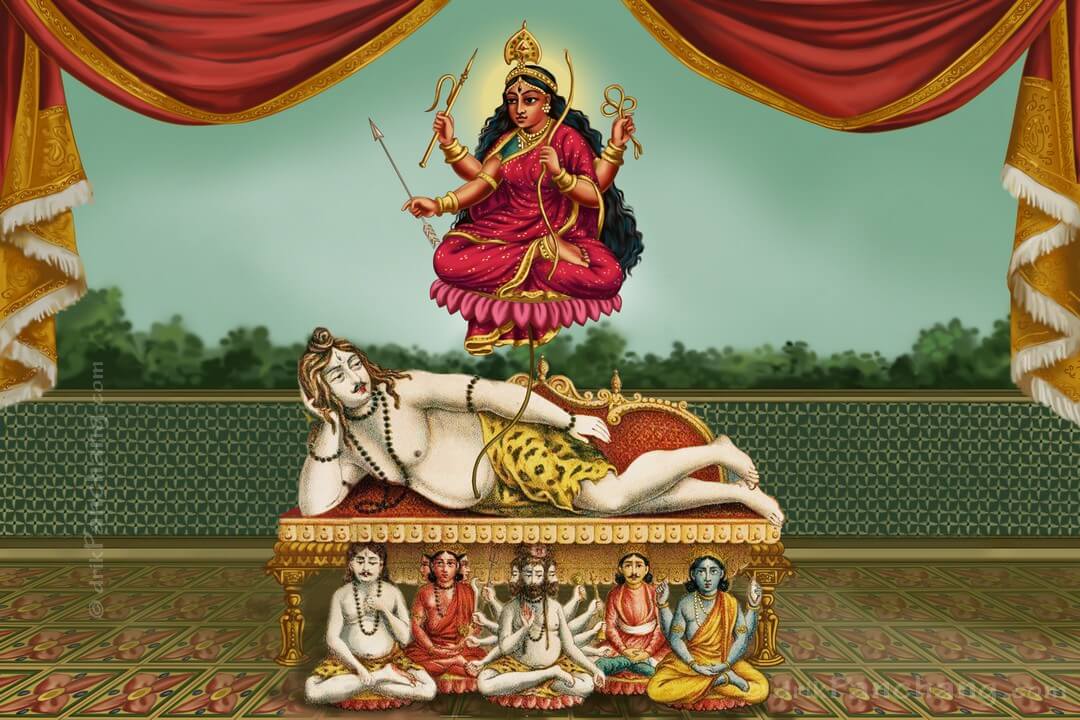
There are many virtues a sadhak must cultivate. Willpower, determination, stability and one-pointedness; but unquestionably, the most important quality of a tantric practitioner is his capacity for surrender.
The paradigm of the universe is that it exists in imperfection, which is also its defining trait. Perfection cannot exist without its absence, and without room for error there would be no free will either. This is the simplified presentation of the apparent paradox of human existence: in order to express perfection, the initial equilibrium of Saguna (attribute-less) Brahman emanates a cosmic egg, which differentiates (through the empirical Big Bang) into Nirguna (with attributes) Atman, which gradually perfects itself into dissolution (mahapralaya, through the empirical Heat Death), and the cycle continues for as long as God desires. This sketch of cosmogony requires much contemplation because the implications are of great importance. Consider how in the vacuum of Brahman, we are all undifferentiated in a “collective” state of moksha (liberated by lacking karma), collective inasmuch as universal consciousness is capable of expressing plurality. But in the reality we live in, souls like ours are dropped in the middle of things, in an imperfect and differentiated universe, and they are given attributes and therefore karma.
A sadhak is a person who understands his role as an atom in this wonderful conglomerate of stardust, and who sees that gross (palpable) reality is merely an emanation of subtle reality. As a result, the sadhak moves through maya aware of the inner law of the universe and how they manifest in the many fields of research that learned men have been studying since the inception of thought. A sadhak’s core concern is for karma, and it is through these lens that he discovers and utilizes the prana in breath, the jivas in the ants at his feet, the bhakti and runanubandhas in emotions, the vayu in asanas, the tattvas in actions, the Brahman in his guru or his favored deity. This enumeration is akin to the universe in that it is potentially infinite. The subtle emanation of the gross may be discovered in as many objects as there are subjects. Mathematicians find God in a fractal, physicians find God in the universal law of attraction, a philosopher finds God to be “as above, so below” and so on. The intellectual realization of nonduality is of course strictly inferior – but a necessary precursor – to feeling it astrally and thus undeniably.
Coming back to imperfection, it is most useful to understand it as the quality of having attributes or karma. We need things to not be perfect in order for us to be able to comprehend them, but it is undesirable for us to be imperfect, even if it is necessary for our free will. As written above, a sadhak is somebody who works toward perfection through striving for awareness and self-determination of karma. It is necessary to return to these fundamental aspects to understand the supremacy of surrender in spiritual practice.
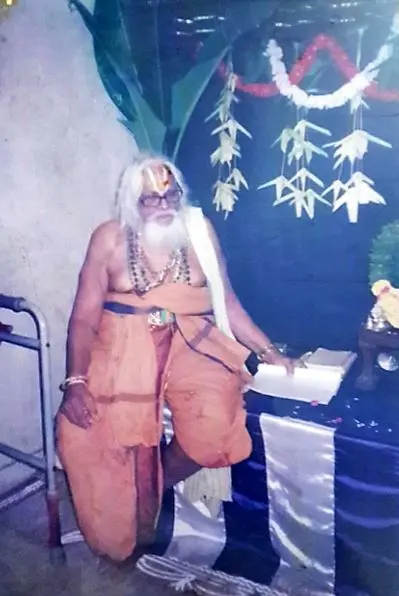
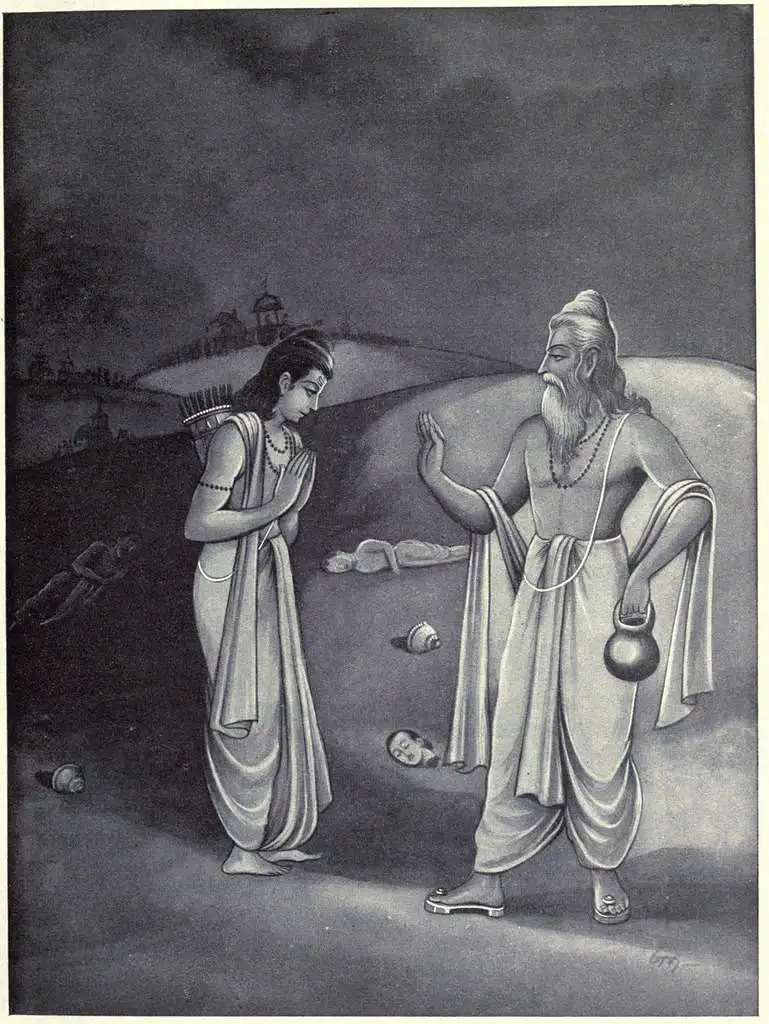
Surrender is the act of thinning the barrier of subject/object between the sadhak and his shakti. This is an universal teaching of all traditions we have been graced with over the millennia of human history. A particular form of surrender is what is scholarly referred to as possession. What this means, in essence, is permitting another will to overwrite yours. This is in fact the most powerful exercise of free will one can perform: the absolute and fairest measure of willpower is the capacity of relinquishing it. Self-evidently, the only way of reaching perfection is to rid yourself of all imperfections. This is most effectively done by surrendering to God’s shadow on Earth, who is the guru. A sadhak possessed by his guru is capable of all feats, and there is nothing impossible to him as long as his surrender is absolute. Arjuna attains clarity, firmness and strength after he surrenders to Krishna. All of Arjuna’s further shortcomings stem solely from his attachments which are nothing else than the imperfection of his surrender, but just look at how much he is able to achieve even if his faith is not complete! This is what all traditions preach for: the faith of a singular mustard seed is able to move even mountains, as it is known.
For a sadhak, all imperfections which block attainment originate from the ego, which fights tirelessly to maintain its differentiation. This is not inherently undesirable: after all, free will and individuality are prerequisites of gaining perfection. But, just as universal as the beauty of surrender is the inauspiciousness of self-identifications. Our bodies, thoughts and our very jiva works ceaselessly to remind us of our self which is different from the Self – the atman is difficult to reconcile with the brahman. It is the sign of a well-functioning soup of neural chemicals that it believes to operate outside the rigid laws of biological determinism or destiny. We would certainly consider a human who does not identify with his discernment to be unwell. As Kuru’s words given directly from the guru state, identity is necessary to function in this world and in human society. But it is just that: a necessity, just like maya is a compulsory condition for the dance between Shiva and Shakti.
It is very important to understand and I will reiterate that all mistakes, all karmas and all consequences which may afflict a sadhak stem from the imperfection of his own surrender and from his attachment to ego. As long as we are embodied, we will continuously remind ourselves that we are distinct individuals and attempt to validate our emotions, thought processes and actions at every step. It is our duty to return to the source and question this predicament every time our concentration lapses. Only thus can we walk toward liberation.
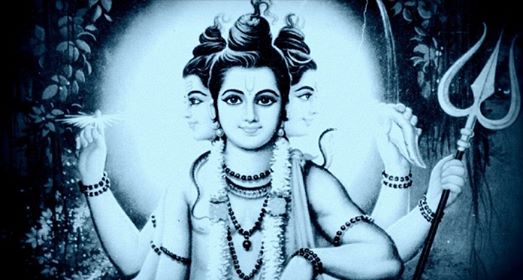
To conclude, I propose examining the supreme example of surrender in Lord Datta Himself. He has attained like none other through the inconceivable wisdom of taking 24 gurus when they presented themselves to him. Just imagine the immense grace needed to take the earth, water, bee, courtesan or sun as guru. Think deeply of this. To make it easier, let us say tonight, a pesky mosquito is buzzing all around the room, darting close to the ears and sometimes itching with its bite. Who among us has such an extraordinary will in order to dissolve completely into this tiny insect and to earnestly ask this insignificant pest for its wisdom? Perhaps none, which is why I publicly prostrate before my guru and beg him to liberate me of all the missteps of my ego and forgive all my past and future trespasses.

Comment
You must be logged in to post a comment.