

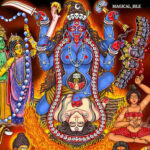
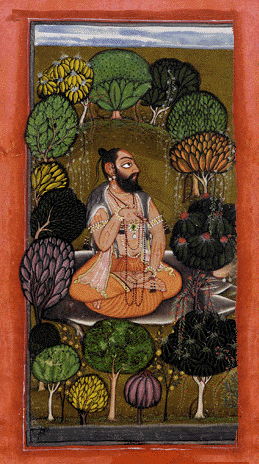
The Buddha in his past life was Mātaṅga Muni. He did extreme penances to forms of Guhya and Kāmakalā Kālī, which enabled him to earn Śakti’s grace in a way like no other being has ever done. He was blessed with sarvavidyā. With this realization, he wanted to find a way to end the suffering of all beings permanently. This cannot be done without the blessings of Bṛhaspati or Brāhmaṇaspati, who is the keeper of the word, or the one who allows ideas to proliferate in this universe that are in accordance with Ṛta; he also ensures the faltering of ideas opposed to it.
Luckily, he pronounced a curse on the Ṛṣi Dīrghatamas, which will be relevant later on.
Mātaṅga wanted to find a state in which beings would be free permanently from rebirth in this world. Mokṣa only lasts until a mahāpralaya. What will happen beyond that? So, by his penance to the Mother, he was not only able to defeat Skanda in battle but also to find a state beyond the most primordial; Skanda was the guru of even Śiva. He found the state before Oṃkāra.
Now let’s return to the ṛṣi. He was cursed by Bṛhaspati: “May your darkness be long.” The name Dīrgha Tamas means a steady or long-lasting state of tamas. His son was Ṛṣi Gautama; the Buddha was called Gautama Buddha and was born in that clan. That’s why he fulfilled the destiny of tapping into his forefathers’ state with the penance he had done as a caṇḍāla.
The Buddha wanted to remove the suffering of all beings permanently. Only a caṇḍāla can have such a desire and can see the world as suffering also. A brāhmaṇa would never do this. What would they do? They would keep people in the world so they can rule over them and push their spiritual progress.

Comment
You must be logged in to post a comment.