
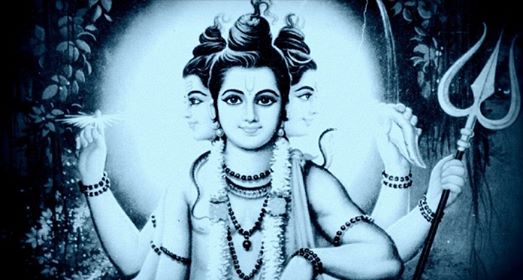

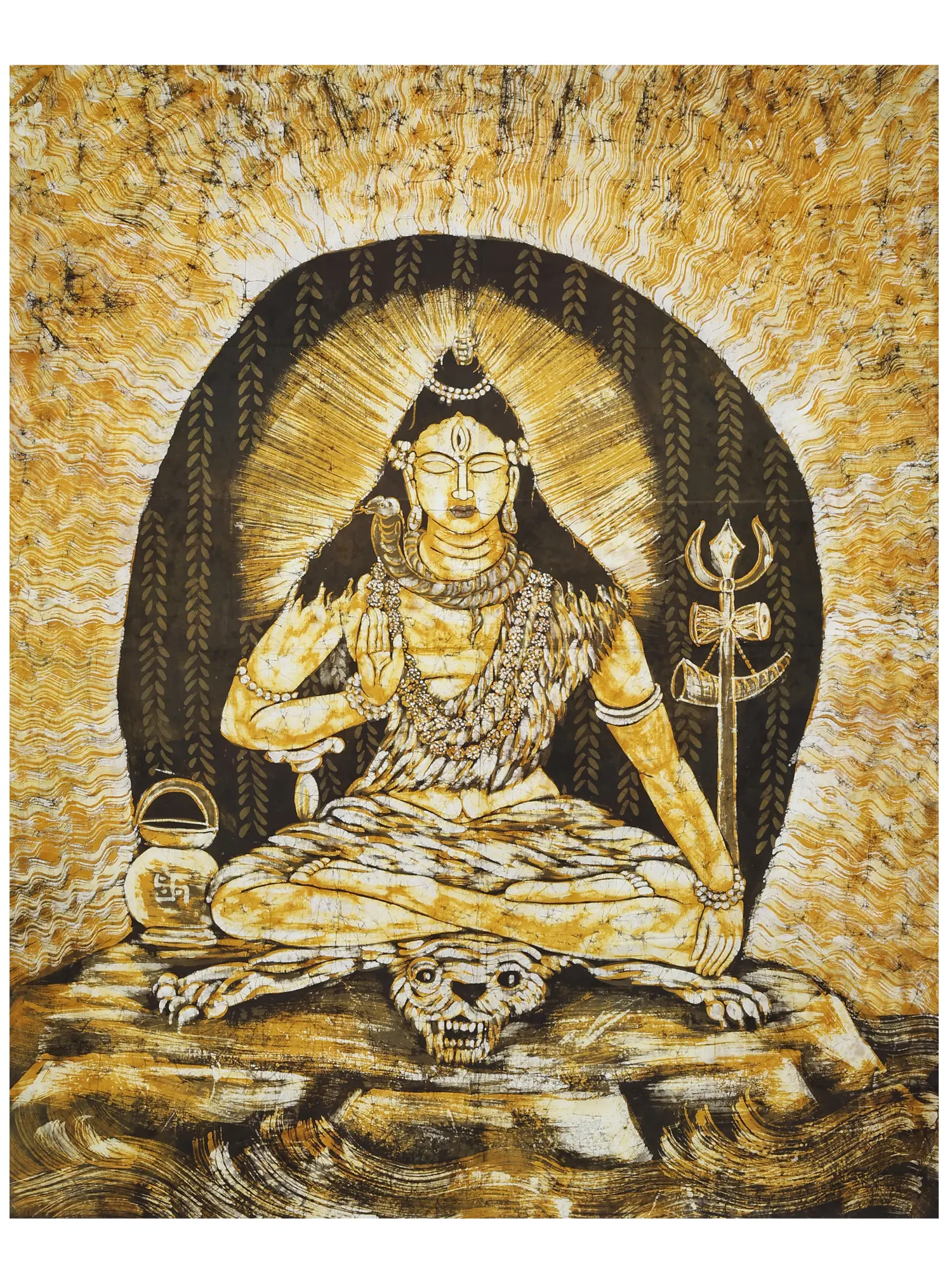
Within Tantra Shastra, one method of perfecting one’s being is meditation. This is often prescribed by Shiva to Parvati, one famous example being the Vijnana Bhairava Tantra. The underlying principle of meditation is very similar to other forms of sadhana: the practitioner strives to willfully overwrite his tendencies. Since thinking itself is the fundamental tendency and unique to humans, this can prove to be very fruitful for some for various reasons. Something that defines individuals – in addition to their latent karmas, unique composition of gunas, planetary influences and other constituents – is their inherent attunement toward iccha, jnana and kriya: in simplification, these are the fundamental faculties of desire, discrimination and action with manifestations in all three sheaths of the body. Of course, all of them should be perfected, but it is inevitable that one will be inclined to develop asymmetrically until very later stages.
Meditation, despite considered mainly jnana/intellectual in application, is fundamental for all three layers. It is known that emotion begets thought begets action, and therefore, diverting your attention to the stages of this process through varying means allows you to intervene at these thresholds in order to best suit your needs, or at the very least, to be aware of the thresholds. The subject of meditation tends to be either philosophical, visualizing or sensory in nature. All of them are equally capable of producing breakthroughs in awareness, and this can be yet another argument for why it is said that japa is supreme. At the moment of chanting, the mind contemplates the deity and its attributes, the visualization is busy imagining the aforementioned dhyana, and the senses are engorged by the subtle vibrations of the syllables.
The practice of meditation is one open to all people, and it has been proven time and time again – through purely mundane methodologies and scientific rigor – to significantly improve life across all conceivable aspects for meditators. This is a gift available to all, requiring no qualification, diksha, or special circumstance – only the willingness to sit still and look beyond.

Comment
You must be logged in to post a comment.