

Uttara Nivesha

Guruji

ॐ श्री गुरुभ्यो चरणकमलाय नमः

Oṁ śrī gurubhyo caraṇakamalāya namaḥ

Paramaguruji

ॐ श्री परमगुरुभ्यो चरणकमलाय नमः

Oṁ śrī paramagurubhyo caraṇakamalāya namaḥ

Ashvatthama

ॐ श्री अश्वत्थाम्ने नमः

Om Śrī Aśvatthāmne Namaḥ

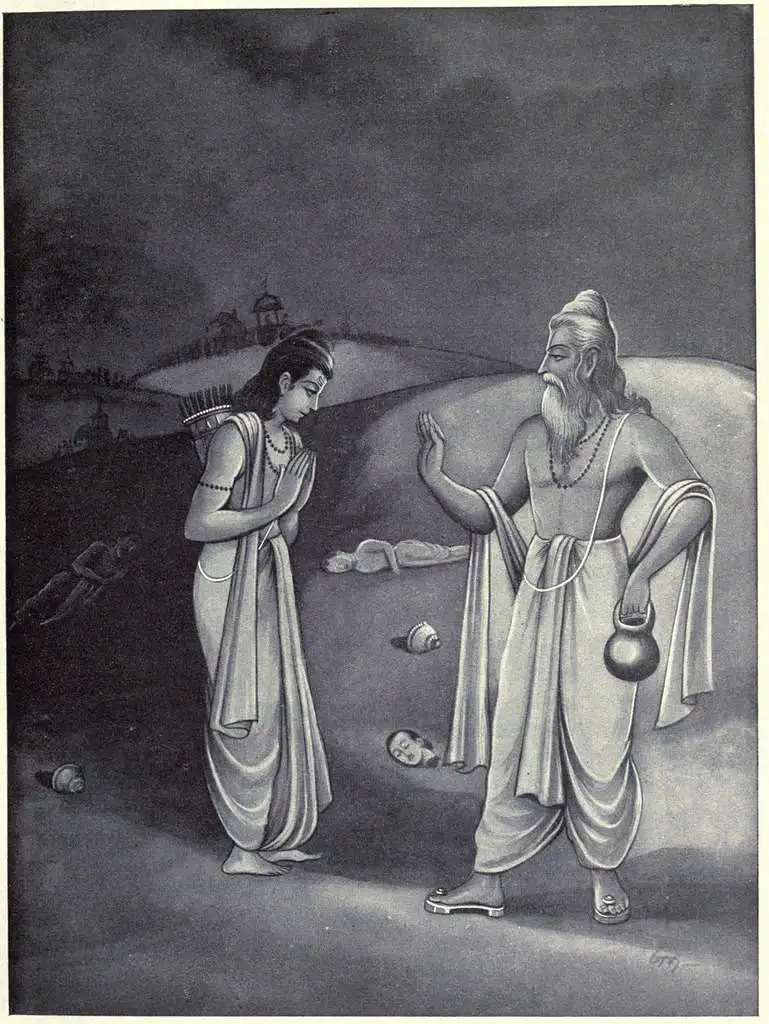
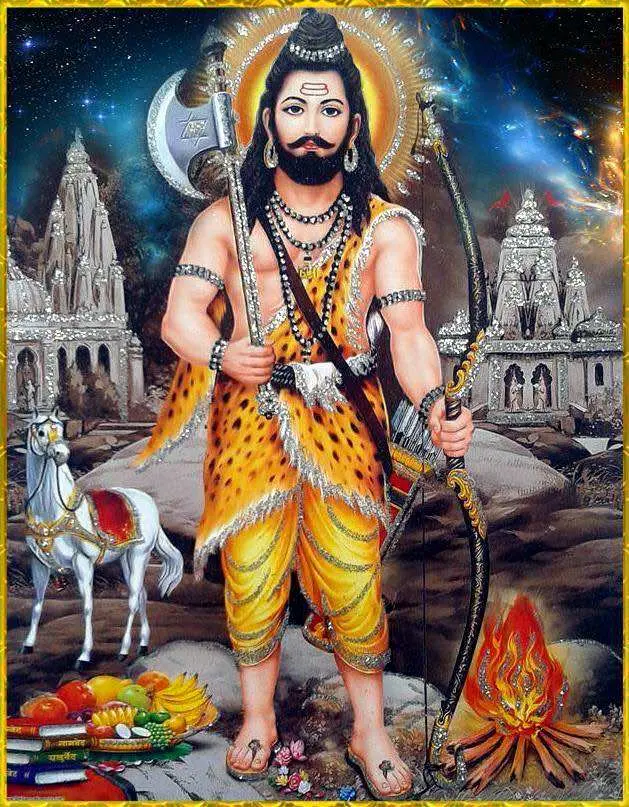
Parashurama

ॐ
क्षितिपति वंश शम्भव मूर्ते
क्षितिपति रक्षा क्षत मूर्ते
भृगुपति राम वरेण्य नमो
हरि भक्तं ते परिपालय माम् ॥

Oṁ
kṣitipati vaṁśa śambhava mūrte
kṣitipati rakṣā kṣata mūrte
bhṛgupati rāma vareṇya namo
hari bhaktam te paripālaya mām

Guru Datta

श्रीमदानन्त श्री विभूषित अप्पल लक्ष्मी नरसिंहराजा! जय विजयीभव, दिग्विजयीभव, श्रीमदखण्ड श्री विजयीभव

Śrīmadānanta Śrī Vibhūṣita Appala Lakṣmī Narasiṁharājā! Jaya Vijayībhava, Digvijayībhava, Śrīmadakhaṇḍa Śrī Vijayībhava

श्री विद्याधरी राधा सुरेखा श्रीराखिधर श्रीपदा! जय विजयीभव, दिग्विजयीभव, श्रीमदखण्ड श्री विजयीभव

Śrī Vidyādharī Rādhā Surekhā Śrīrākhidhara Śrīpadā! Jaya Vijayībhava, Digvijayībhava, Śrīmadakhaṇḍa Śrī Vijayībhava

Latest article

Fruitful Forms for Meditating

Within Tantra Shastra, one method of perfecting one’s being is meditation. This is often prescribed by Shiva to Parvati, one famous example being the Vijnana Bhairava Tantra. The underlying principle of meditation is very similar to other forms of sadhana: the practitioner strives to willfully overwrite his tendencies. Since thinking itself is the fundamental tendency and unique to humans, this can prove to be very fruitful for some for various reasons. Something that defines individuals – in addition to their latent karmas, unique composition of gunas, planetary influences and other constituents – is their inherent attunement toward iccha, jnana and kriya: in simplification, these are the fundamental faculties of desire, discrimination and action with manifestations in all three sheaths of the body. Of course, all of them should be perfected, but it is inevitable that one will be inclined to develop asymmetrically until very later stages.

Meditation, despite considered mainly jnana/intellectual in application, is fundamental for all three layers. It is known that emotion begets thought begets action, and therefore, diverting your attention to the stages of this process through varying means allows you to intervene at these thresholds in order to best suit your needs, or at the very least, to be aware of the thresholds. The subject of meditation tends to be either philosophical, visualizing or sensory in nature. All of them are equally capable of producing breakthroughs in awareness, and this can be yet another argument for why it is said that japa is supreme. At the moment of chanting, the mind contemplates the deity and its attributes, the visualization is busy imagining the aforementioned dhyana, and the senses are engorged by the subtle vibrations of the syllables.

The practice of meditation is one open to all people, and it has been proven time and time again – through purely mundane methodologies and scientific rigor – to significantly improve life across all conceivable aspects for meditators. This is a gift available to all, requiring no qualification, diksha, or special circumstance – only the willingness to sit still and look beyond.

4 comments

  1. Dhurandhar Avatar
    Dhurandhar

    Good perspective. Meditation is central to the raja yoga path, and is also hugely important in the other branches of tantra and yoga. When the practices of meditation and mantra converge, the resulting composite practice is manasika japa, which is highly lauded in the tantras and elsewhere too.

    1. Herodion Avatar

      Manasika was the form given to me by my guru from the start: it is well known that speaking a mantra aloud “burns” it. To my knowledge, whispered japa is only recommended for the first few malas until one perfects pronounciation. Related to meditation, also consider how vachaka/vachya meld into each other most easily through mantra. Many sages – especially in traditions such as Buddhism – preach for dissolving the boundary between subject/object. This can of course be achieved through sheer concentration, but it is much easier as a side effect of focusing on melting into your guru/ishta/mantra.

      1. Dhurandhar Avatar
        Dhurandhar

        Replying to Herodion

        Good to know that your guru started you off with mental japa outright. For those who have the capability, it is a highly productive route.

        As regards the idea that reciting a mantra aloud is somehow improper (and its counterpart, that mental japa of any stotra etc is useless), I must point out that the matter is not so cut-and-dried or as categorically black-and-white as popularly understood. There are uses to the sasabda (“with articulated sound”) form of mantra japa, and there are certain specific applications too. However, this cannot be discussed further on public forums as the matter requires discretion. For now, it is enough to know that subtleties exist.

        Practically the whole of Patanjali’s Yoga Sutras deal with the practice of dissolving the subject-object binary through various means. In the agamas and tantras, we find substantially the same approach at the inner levels of Shadanga Yoga (the six-limbed yoga), with tarka playing an outsized role. The Buddha and his later disciples engaged with and refined the techniques further. Later, some innovations were made. And some mis-steps too occurred. But that’s another story.

        I admit the practice of bhavana focused on the devata or the guru is a powerful means of going beyond the duality of the seen and the seer, or rather in Samkhyan terms, the triad of the Known, Knowledge, and Knower. Pranidhana by any means or angle is most potent.

        You keep up the good work, my friend. God bless.

        1. Kuru Avatar
          Kuru

          Replying to Dhurandhar

          I am going to jump in to confirm and validate this as well. Out loud recital of mantra is not only useful in regular sadhana, but also very powerful for certain applied purposes. But yes discretion must be taken in discussing this.

          As for the use of out loud recital in ordinary sadhana, it was communicated to me at some point, that for a mantra to be fully imprinted in the physical and subtle bodies, and to be mastered in totality, it must be practiced in all of the methods. Both gross and subtle. Even further than the method of pashyanti exist very subtle forms of mantra dhyana to go even more subtle. The purpose is to embody the mantra in totality.

          Let us not forget that just as tamas rajas and sattva are equally significant in creation, so are the different types of spoken word.

          Matsyendranath teaches that in practice there is great importance of absolute dissolvement of Jiva into Shiva through the various practices centered within the highest points of the body, above brahmarandhra and even above shunya one reaches Shiva.

          But for practical purposes of mastery over oneself and the lived existence he also places a great of significance upon the lower chakras below the muladhara, which are generally taught to be avoided entirely. What does this tell us? Not that we should try something like this on our own, but it is only to draw a comparison and to help bring into understanding. To the understanding of mantra.

          I will go more into depth on this, as much as I am able to for the general audience. In the near future.

Comment